
In the world of large-scale distribution, there are many product niches that require specialised storage facilities and transportation methods. One such example is the delivery of meat products, whether beef, pork, poultry or other varieties. Here, a temperature-controlled meat transport vehicle may be employed to ensure that the products in question remain at a specified temperature throughout the journey.
This is in part due to the numerous risks involved in the long-distance transportation of meat, which can result in product deterioration at best and consumer harm at worst. Temperature fluctuations can cause spoilage, bacterial growth, and a loss of quality, making it imperative that meat products are kept within strict temperature ranges from the point of processing to the point of sale.
With the UK meat wholesaling industry projected to rise to £17.1bn, there is no shortage of consumers or businesses operating within the food industry who expect the highest quality products. This means that a thorough understanding of the meat supply chain and the associated regulations are not merely niceties, but necessities.
In this comprehensive guide, we apply our 50 years of experience transporting goods up and down, in and out of the country, including delivering medal-winning ribeye to the World Steak Challenge in Amsterdam. As well as outlining the typical meat transport processes we demonstrate ways of reducing risks and staying compliant.

Demystifying the supply chain from abattoir to end-user
In the UK, the meat supply chain represents a complex network of relationships between various agents in the production/rearing, slaughtering, processing and transportation of meat products to the final consumer, often via an intermediary such as a butcher, retailer or food service outlet. This journey is complex and labour-intensive, with hygiene protocols and safety legislation baked into each step.
Abattoir
At the abattoir, skilled workers follow a strict set of legal requirements when tackling the slaughtering and processing stages to maintain the meat’s integrity and to avoid injury via equipment, lifting, animals etc, with guidance issued by the British Meat Processors Association (BMPA).
Processing
The processors are responsible for butchering cuts of meat, removing bones, inspecting its suitability for consumption and ensuring that the product meets the required standards for safety and quality. This includes the careful inspection of meat for any signs of disease or contamination and the implementation of robust traceability systems to track each piece from origin to end user.
Distribution and storage
Once processed, the meat enters the cold chain logistics system, a critical component that maintains the product at optimal temperatures during transportation and storage. Cold chain logistics is essential to prevent spoilage and to extend the shelf life of meat products, ensuring they arrive fresh and safe for consumers.
Transportation is often carried out by specialised food-grade vehicles equipped with refrigeration units, ensuring that the cold chain remains unbroken. At distribution centres, further checks are conducted to verify the integrity and safety of the meat before it is dispatched to retailers or food service outlets.
Retail
Retailers and food service providers then play a vital role in the final stages of the supply chain. They must store meat products under appropriate conditions and follow strict hygiene practices when handling and preparing the meat for sale or consumption.
The journey from abattoir to end user is thus a testament to the coordination and diligence of all parties involved in the meat supply chain, as each plays its role in ensuring that consumers receive high-quality, safe products.
Types of meat transportation
Meat can be distributed in various forms, each requiring specific conditions to ensure quality and safety during transport. The primary forms include packaged meat, canned meat, and hanging meat, some of which are dried, cured, chilled or frozen.
Each type of meat demands unique handling and storage conditions to prevent spoilage, contamination, and degradation. For instance, chilled and frozen meats necessitate temperature-controlled environments, while for dried and cured meats protection from moisture and contaminants is the main priority. Understanding these diverse transportation needs is crucial for maintaining the integrity and safety of meat products from the processing plant to the final consumer.
Hanging meat transport
Meat products make up a sizeable proportion of the UK’s food trade, with both imports valued at £6.79bn and exports valued at £2.05bn in 2023. Therefore, it isn’t surprising that hanging meat transportation forms a vital part of the food supply chain at large.
To provide a definition: hanging meat transport concerns the distribution of meat in a temperature-controlled environment (typically chilled, but sometimes frozen) and suspended from hooks to maintain its integrity.
This transport method requires vehicles that can handle the specific product capacity of the supplier as well as robust, temperature-controlled environments. Typically, this entails refrigerated units that can consistently maintain the optimal chilled or frozen conditions needed to prevent spoilage and bacterial growth. The interior of the vehicle should also be outfitted with strong, sanitary hooks or rails from which the meat can be suspended. This setup ensures that the meat remains air-exposed, reducing the risk of pressure damage and contamination from surfaces.
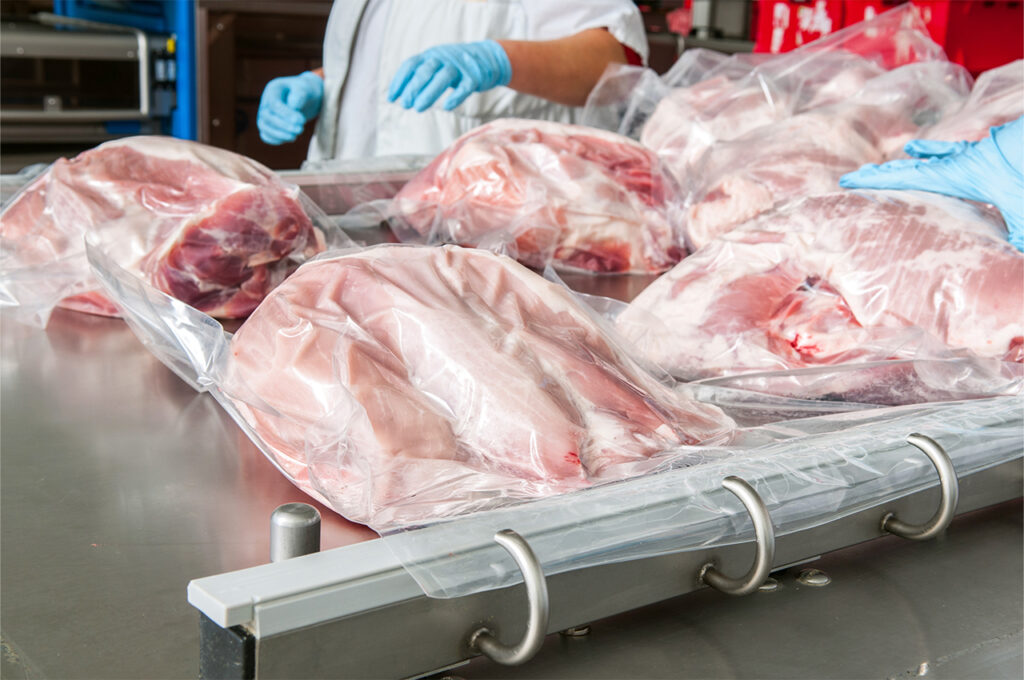
Packaged meat transport
Similarly, transporting processed and packaged meats requires vehicles equipped with specialised features: reliable temperature-controlled systems and insulated compartments for storing the products.
The interior of the vehicle should be designed to prevent cross-contamination, with smooth, non-porous surfaces that are easy to clean and sanitise. Adequate shelving or securement systems are necessary to keep packaged meats organised and to prevent shifting during transit, which could damage the packaging or the products themselves.
Temperature-controlled vehicles and meat distribution
Temperature-controlled vehicles are specifically designed to handle the delicate nature of meat products. They are equipped with advanced refrigeration units and temperature monitoring systems that ensure the cargo remains within the required temperature range throughout the journey. This technology helps mitigate the risks associated with transporting animal products, such as product deterioration, cross-contamination, and potential consumer harm.
Risks associated with transporting animal products
Due to meat’s delicate biological properties, it is vulnerable to a whole number of risks. Here are the key ones to consider.
Product deterioration
Transporting animal products poses a risk of product deterioration if meat is not kept within the required temperature ranges. Fluctuations or improper handling can lead to spoilage, reduced quality, and shorter shelf life, making it crucial to maintain consistent, controlled environments throughout transit.
Cross-contamination
Another significant risk is cross-contamination, where pathogens or contaminants from one product or surface can spread to others. This can occur if hygiene standards are not strictly adhered to or if there is inadequate separation between different types of products within the transport vehicle.
Consumer harm
Naturally, the previous risk runs into this one. Poor handling or transport conditions can result in unsafe meat products reaching consumers, potentially leading to foodborne illnesses.
Reputational damage
Failing to manage these risks effectively can lead to reputational damage for businesses. If consumers or regulatory bodies identify issues such as spoilage or contamination, it can result in loss of trust, negative publicity, and legal consequences.

Requirements for the safe transportation of meat products
To mitigate and overcome the hurdles we’ve just gone through, robust risk management strategies must be implemented. These strategies cover everything from food safety legislation and document to energy efficiency and route optimisation.
Health and safety compliance
Numerous regulatory standards, such as Regulation (EC) 852/2004, outline the hygiene requirements for foodstuffs, mandating that all stages of transportation maintain appropriate temperatures and sanitary conditions. For instance, red meat must attain a specific temperature; 7°C for carcass meat and 3°C for offal. Regular inspections, temperature monitoring systems, and comprehensive staff training are essential to uphold these standards.
These measures ensure that meat products arrive at their destination in optimal condition, safeguarding consumer health and maintaining public trust in the food supply chain, but they also allow for values of continual improvement and development to be baked into Food Business Operators’ systems.
Temperature monitoring systems
Temperature monitoring systems are essential for ensuring the safe transportation of meat products, particularly those that are chilled or frozen. Regulation (EC) 852/2004 outlines specific temperature requirements: chilled meats must be maintained at temperatures close to 0°C, while frozen meats should be kept at temperatures not exceeding -18°C.
These systems continuously track and record the temperature within transport vehicles, warehouses, and storage facilities, ensuring compliance with these stringent guidelines to prevent spoilage and bacterial growth.
Advanced temperature-controlled logistics technologies include real-time alerts for temperature deviations, allowing for immediate corrective actions. Regular calibration and maintenance of these systems are crucial to ensure accuracy and reliability, and typically fall under HACCP planning.
Energy efficiency
Energy efficiency in meat transportation is a cornerstone component of sustainable logistics and distribution, and this applies to meat transport vehicles. Modern refrigerated HGVs are designed to minimise fuel consumption while maintaining strict temperature controls essential for preserving meat quality.
By implementing advanced refrigeration systems and energy-efficient technologies, such as electric or hybrid engines, we can significantly reduce our environmental impact and operational costs. Usually, this will be paired with insulated containers and optimised refrigeration units that help maintain consistent temperatures with lower energy inputs.
Prioritising energy efficiency here not only supports environmental sustainability but also ensures compliance with increasingly stringent regulations on emissions and energy use in the logistics sector.
Route optimisation
Route optimization plays a vital role in the efficient and timely transportation of meat products. By leveraging advanced GPS and logistics software, transportation companies can plan the most efficient routes, reducing travel time and fuel consumption. This both lowers operational costs and ensures that meat products remain within the required temperature ranges via reduced delays.
Effective route planning considers factors such as traffic patterns, road conditions, and delivery schedules, allowing for real-time adjustments to avoid potential disruptions. Implementing route optimisation strategies enhances the overall efficiency of the meat supply chain, contributing to both economic and environmental benefits.
Up-to-date knowledge and training
Employees involved in the meat supply chain should be required to become well-versed in current regulations, best practices, and technological advancements. Regular training programs and transport accreditations, such as those offered by BRCGS, ensure that staff are knowledgeable about food safety, hygiene standards, and the latest industry practices. Continuous education helps prevent mishandling and contamination, maintaining the integrity and quality of meat products throughout the supply chain.
Insurance and documentation
Comprehensive insurance and proper documentation are just as critical as the systems used to maintain product temperatures. Insurance policies tailored to the meat supply chain protect businesses against potential losses from spoilage, contamination, or accidents during transport.
Proper documentation, including detailed records of temperature logs, hygiene practices, and regulatory compliance, is essential for traceability and accountability. Accurate documentation ensures that all stages of the supply chain adhere to legal requirements and standards, providing transparency and confidence to consumers and regulatory bodies.
Importing and exporting animal products
Importing and exporting animal products involve navigating complex regulations and obtaining necessary certifications such as Export Health Certification (EHC). A reliable distribution partner can assist in understanding and meeting these requirements, ensuring that meat products are transported safely and legally across borders.
Finding a distribution partner to supply meat transport vehicles
When seeking a reliable distribution partner, the initial step is to clearly define which parts of the supply chain you need to outsource. Communicating your specific requirements and expectations is crucial. Provide detailed information about your product specifications, expected volumes, delivery timelines, and any unique challenges your business faces. This transparency ensures that potential partners understand your needs from the outset and can offer tailored solutions.
Engaging in open discussions about processes and services helps both parties establish a mutual understanding and alignment, preventing misunderstandings later on. It is important to assess the provider’s capabilities and experience in handling products similar to yours, ensuring they have the necessary tools and knowledge to meet your standards. Checking references, reviewing case studies, and evaluating their compliance with relevant regulations and certifications can also provide insights into their reliability and performance.
By fostering a transparent and communicative relationship, you lay the foundation for a seamless partnership. A reliable distribution partner will not only meet your logistical needs but also contribute to the overall efficiency and success of your meat supply chain.
Closing statement
Opting for the appropriate meat transport vehicle, distribution partner and transportation methods for your product requirements is crucial to maintaining quality and safety throughout the supply chain.
By following best practices and staying compliant with regulations, businesses can ensure that their meat products reach consumers in the best possible condition, keeping operations both economically and environmentally sustainable.