
An agile and robust supply chain strategy is the not-so-secret sauce to business success in an age marred by disruption from geopolitical tensions, evolving trade policies and climate change. Indeed, it’s often the difference between effective goods management and a brand that flops.
But implementing an adaptive methodology that faces up to the scale of these challenges is easier said than done. Which is why, in this article, I’m going to draw on my decades-long experience in the transport sector to outline everything SMEs should know about supply chain management and strategy.
It’s time to safeguard your goods, profit margins and brand reputation with these essential insights. Sneak peek: resilience should underpin every element as a core driver of efficiency and sustainable growth.
Skip ahead
- What is Supply Chain Strategy?
- Why Strategy Matters Now
- What Makes an Effective Strategy
- Popular Supply Chain Models
- Case Studies
- Strategic Priorities for UK Businesses
- Conclusion + Next Steps
What Do We Mean by Supply Chain Strategy?
The concept of a supply chain strategy can be boiled down to an overarching plan for the provision, design, management and monitoring of activities along the chain. Each of these activities is geared towards efficiency, cost-effectiveness and, generally, optimising ROI. As with any professional discipline, results don’t materialise out of nowhere; attention to detail and data-driven insights fuel coordinators’ success.
Why it Matters More Than Ever for Regional Firms & SMEs
If the business world is feeling more uncertain than ever, you’re not alone. Those sentiments aren’t unfounded; recent data from leading resiliency solutions provider Resilinc found that 2024 saw a nearly 40% annual increase in disruptions.
I need not remind you of the impact of Trump’s trade war on global supply networks, but I will point out a handful of supply chain interruptions that, in the wake of the tariff coverage, may have flown under the radar.
Indeed, the top 5 disruptions for 2024 were:
- Factory fires
- Labour issues (site-level and national strikes, protests, regulatory changes and layoffs)
- Business sales
- Acquisitions and mergers
- Leadership transitions
This doesn’t even account for the shockwaves caused by natural disasters, rapidly evolving logistics technology, or the long-term impacts to crop growth and temperature chain monitoring wrought by global warming. Truly, it’s a deadly cocktail.
Supply Change Disruption as the ‘New Normal’
With an unprecedented level of shocks to both global and regional supply networks, it’s not difficult to conclude that these disturbances constitute the ‘new normal’.
As many as 4 in 5 European supply chain leaders expect industry upheaval to continue unabated for another two years – myself at Dennis Distribution included. These findings reaffirm my belief that agility and efficiency ought to be at the forefront of transport and logistics coordinators’ minds, however small a business’s operations.
Even the tiniest independent business should make a distinction between day-to-day logistics and a broader supply chain strategy; one that meets the ever-fluctuating demands of consumers and overcomes the challenges laid out above.

What Defines an Effective Supply Chain Strategy?
In a terrain where unpredictability is the only predictable factor, there’s increasing pressure to tighten up business processes. This requires an effective supply chain management strategy that foregrounds the following key traits.
Agility / flexibility
Distribution and logistics is an infamously fast-paced sector. Therefore, your strategy should be scalable both ways – increasing or decreasing consignments – to meet market demand at short notice, so you can capitalise on opportunities that crop up unexpectedly.
Transparency
Being transparent about your processes, in customer-facing documentation, contracts and face-to-face interactions with stakeholders, brings untold value to your supply chain. It facilitates trust between partners and enhances your reputation among consumers – of which four-fifths are willing to pay a sustainability premium despite the cost-of-living bite!
Digital-first
Tech enablement and an open mindset pay dividends as your competitors scramble to upskill their teams with AI developments and get ahead. From predictive route planning and optimisation to order processing automations, technology can give your operations an edge.
Collaborative
Partner and stakeholder alignment are crucial to a well-oiled distribution network. That means welcoming collaboration and knowledge sharing wherever possible, and potentially even overhauling the way your team approaches distribution management.
Compliance
Attention to detail as it pertains to compliance must not be overlooked, since your business is liable to protect consumers. Following health & safety guidelines and instilling a culture of care into your practices will ensure better performance and, of course, safeguard your organisation from fines and reputational damage.
Resilience
Given the risk factors at play, supply chain resilience is of the utmost importance, allowing you to create contingency plans, mitigate hazards and pivot accordingly. Those that don’t, more often than not, are overtaken by the competition and fall to the wayside.
Creativity
In my experience at Dennis Distribution, creativity has seen us through difficult times – be it Brexit or the cost-of-living crisis.
Recently, our team has explored new transportation strategies, including a consolidation offering where we transport smaller numbers of pallets in one vehicle, rather than following a full load approach. The result? An influx of new customers with niche requirements we can fulfil, along with greater sustainability gains.
As our Senior Partner, Kate Dennis, explained in the video below: “My current team are the people that inspire me the most. It’s my position to be provocative; we’ll all look at the figures, and I’ll say, ‘Why is this? Why is that?’ They always go away and come back with something fairly innovative that I would never have thought of!”
SMEs vs. Global Firms
While the core tenets above apply to every supply chain, strategies will naturally differ, depending on the scope of your operations and the size of your business.
Global firms, on one hand, have greater resources and capital, which gives them the best pickings of suppliers, or even the ability to effectively ‘lock out’ the competition that relies on slower networks.
On the other hand, smaller regional firms often operate on an extremely niche basis, specialising to slot into a narrow slither of the market and differentiate from the bigger players. For instance, at Dennis Distribution, we use purpose-built refrigerated vehicles for temperature-sensitive goods like goat’s cheese or condensed milk. Here, it’s not about transportation in mass or heavy cost-cutting, but providing a specific service no one else can match, running as if you’re that particular customer.
Another thing the smaller players have in their corner is the personalised nature of running a small business, which lends itself to a closed supplier relationship management approach with deeper, collaborative ties with a small group of trusted partners. A long-term view of your strategy, such as this, helps futureproof your business against the shocks I discussed earlier.
Common Pitfalls in Weak Strategies
So, in the world of supply chains, what separates the wheat from the chaff? Here are just a handful of pitfalls worth being aware of. Of course, this isn’t an exhaustive list.
- Overreliance on cost-cutting: Cost reduction has its place, but don’t put your eggs all in one basket; cutting expenses without considering the broader implications can lead to poor decisions and inefficiencies down the line. Single sourcing is a no-no in procurement.
- Poor supply chain visibility: Operating without a clear, real-time view of the entire chain makes it difficult to track inventory and respond to changes, leading to delays, stockouts and, ultimately, lost opportunities.
- Underutilisation of tech or forecasting tools: However small your business, you need to stay ahead of the curve as your competitors adopt new technologies. Automations in inventory management, forecasting, route planning, and more give you an edge in terms of agility.
- Inadequate risk management: Risk management underpins a solid supply chain strategy, allowing you to predict disruptions and respond to them nimbly while the competition is left floundering.
- Poor management and communication: Soft skills are just as important as technical competence, particularly where a single miscommunication could snowball into holdups across the supply chain. Transparency, honesty, clarity and tact are all essentials here.
Popular Supply Chain Strategy Models
With the attributes and pitfalls of supply chains in mind, there are numerous strategic models for businesses to choose from. The exact blueprints will depend on your long-term business objectives, the DNA of your particular sector and market niche, the nature of your product, and your capacity for technological innovation. Again, smaller firms might be limited in this regard and resort to being more specialised in their offering.
Do note that while I provide 5 concrete examples, in practice, companies sometimes merge multiple strategies simultaneously across different arms of the business. Indeed, they might find that a hybrid approach allows them to be more resilient on the whole.

Putting the Theory Into Practice: Supply Chain Strategy Case Studies
Lenovo
Lenovo, a big name in tech hardware and AI development, are a great example of supply chain strategy done well. Snagging the 8th spot in the Gartner Supply Chain Top 2025 list, the company has been recognised for its agile management of over 30 manufacturing sites across 11 markets around the world.
The driver of Lenovo’s success has to be its strategic alignment of supply chain improvements with its Environmental, Social, and Governance (ESG) commitments. Leveraging cutting-edge AI systems for production scheduling, their logistics team has made more responsive product decisions, reduced waste through more accurate planning and, ultimately, turned inopportune circumstances into advantages.
As Ben Massie, the Vice President of their Global Supply Chain, said: “As supply chains become more complex, staying resilient is no longer enough. Lenovo is now focused on becoming ‘anti-fragile’—not just withstanding disruption but getting stronger because of it.”
How We Build Resilience Into Our Operations at Dennis Distribution
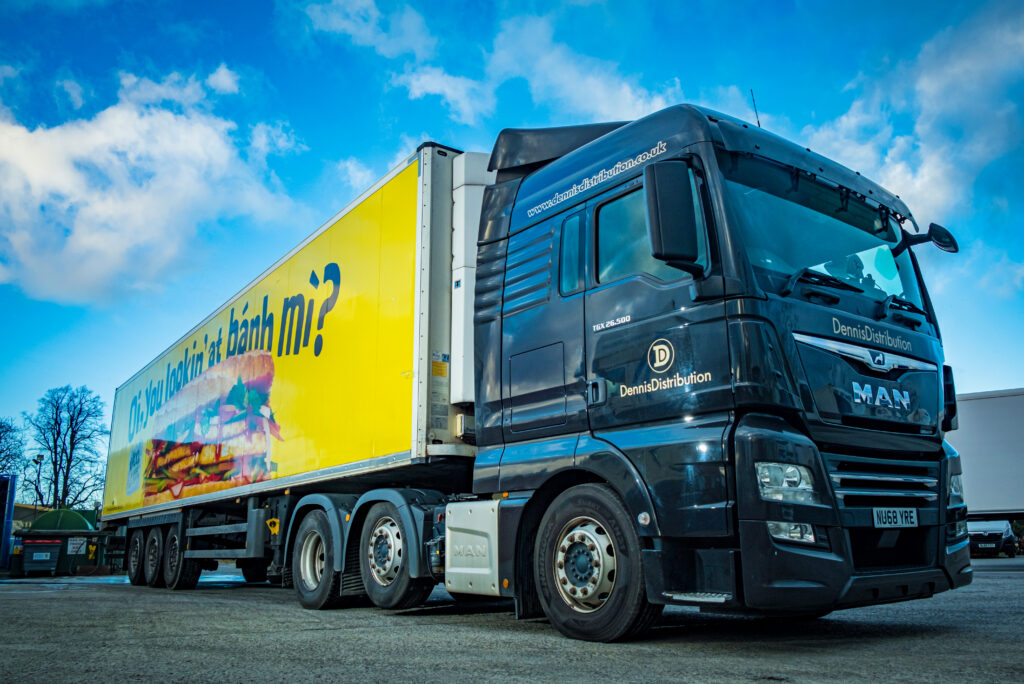
On a smaller national scale, we at Dennis Distribution have been constantly tweaking and refining our processes to bring improved ROI to our customers.
One successful example is our work with The Tofoo Co, the UK’s largest meat-free food brand. Here, we’ve implemented a customised supply chain strategy to meet their bespoke product needs as their team consolidated their transport logistics.
This involved providing a tailor-made fleet solution: beautifully branded HGVs to boost exposure with integrated cold chain systems to keep the tasty plant-based products inside at optimal temperatures throughout the journey.
Strategic Priorities for UK Businesses in 2026 and Beyond
All businesses, large and small, can prepare for market uncertainty as we move into 2026 and beyond. Much risk mitigation comes down to careful contingency planning, the ability to pivot fast, and better intelligence to aid decision-making, which calls for rethinking all of the tools and approaches at your disposal.
Of course, you might wish to upgrade your logistics technology stack and centralise systems, but don’t forget the intangible elements, such as team training, creativity, and long-term relationship building with stakeholders – these connections are dime a dozen in an uncertain world.
Finally, as we edge ever closer to the UK’s net-zero targets, businesses should be thinking more about sustainability and how it can actually improve their wider operations through efficiency gains and consumer attitude alignment. Truly, it’s the future of distribution, and nobody wants to be left behind.
Back to the Drawing Board: How to Assess if Your Strategy is Up to Scratch
And so here ends this guide to supply chain strategy. I hope it has left you with some food for thought.
Whether your goal is to tighten up your existing transport network, enhance how you work with suppliers or expand a side of your business through specialist outsourcing, infusing the core attributes shared earlier will get you on the road to success.
The first step, though, is to evaluate what’s already going on. That means regularly revisiting your documentation, benchmarking core KPIs and looking out for inefficiencies in your approach.
If you need a second opinion, don’t hesitate to reach out to a Dennis Distribution consultant – we’ll have a friendly chat about your transportation requirements and streamline your strategy, however niche the products.