
When handling perishable products, it’s non-negotiable that they’re kept at the correct temperature in order to maintain their quality and integrity throughout the supply chain. And this is true of not only chilled and frozen goods, but those that require ambient temperature conditions. But what exactly is ambient temperature and how does this apply to ambient transportation?
Defining ambient transport & unearthing its real terms meaning
When manufacturers and distributors mention ambient transport, they are referring to the transportation, handling and control processes of cold chain products that need to be kept at ambient temperature. Often such products are sensitive to changes in temperature and will degrade if they are shipped in a container that becomes hotter and/or colder.
What is ambient temperature?
While there’s some dispute from continent to continent regarding the precise temperature range that constitutes “ambient”, it typically falls between 15°C to 25°C. Both the World Health Organisation and European Pharmacopoeia, cite this range and usually suggest storage at “room” or surrounding temperature in a cool, dry and clean place. Due to notable variations in ambient temperature, this label is used in more general terms.
With regard to transportation, this, unfortunately, remains quite ambiguous. However, ambient trailers will be able to sustain whatever temperature-controlled environment is required for the product at hand. This is because they are equipped with slick monitoring systems that can regulate their internal thermal conditions down to a degree. Thanks to this handy tech suppliers need not worry about their products spoiling.
Ambient temperature vs room temperature
As a layperson, it is easy to conflate ambient temperature with what we call “room temperature.” While similar, it is important to unpick the differences.
Put simply, ambient temperature deals with a given environment and, therefore, logically can change – hence, the variation we discussed earlier. In contrast, room temperature is less scientific and more colloquial in its meaning. It refers to the temperature range that most people find comfortable indoors, generally taken to be between 18°C and 20°C.
Ambient transport
Refrigerated trailers fitted with specialist temperature monitoring software are an excellent option when dealing with products requiring ambient transportation and storage. Although ambient goods typically have a long shelf life – think tinned and processed foods, fruit juices and medicinal items – accurate temperature control is key. To preserve these items regular temperature checks and audits are recommended in order to control outside factors that may cause temperatures to fluctuate.
Factors that affect ambient conditions
As we’ve established, ambient temperatures are prone to fluctuation. To which you may ask, “why?” In the case of ambient transport, several factors could influence temperature in transit. An experienced distributor will anticipate and mitigate these factors to maintain a stable environment. They include:
- Seasonal changes
- Weather conditions
- Overnight temperature
- Journey length
- Collection and delivery locations
- Vehicle insulation
- Cooling/ heating systems used
- Product quantity

Managing ambient distribution
For ambient goods to arrive safely at their destination, they must be subject to good manufacturing practices and quality system regulation, including temperature-controlled logistics. This field within the distribution industry is not only responsible for getting the ambient products from A to B safely, but is aimed at preventing waste whilst helping overstretched businesses cope with surges in demand.
Here, a supplier has to make the choice between contract logistics and a 3PL provider, depending on their particular needs. The major benefit of looking toward a third-party logistics company is their ability to find end-to-end logistics solutions that are both scalable and flexible. Contract distribution is better suited to those seeking a long-term strategic partnership and whose requirements are more complex.
Many distributors, across various working models, offer specialised ambient logistics services, which incorporate advanced control systems that manage the precise temperatures required of the product. To find your ideal partner, we recommend starting by conducting thorough research and future planning. It is important to identify the risk factors, product volumes and shipping processes that need to be communicated, as well as determining which parts of the supply chain require extra care.
Adhering to national standards and regulations
As with any aspect of the food supply chain, adhering to national standards and regulations is paramount in ambient transport. Compliance ensures that products are handled safely and remain fit for consumption throughout their journey. Various regulatory bodies set forth guidelines that dictate temperature controls, packaging requirements, and hygiene practices.
In the UK, it is essential to follow the regulations outlined by the Food Standards Agency (FSA) and other relevant authorities. These regulations not only help maintain the quality and safety of ambient goods but also protect consumers from potential health risks.
Regular training for staff, rigorous audits, and detailed record-keeping are crucial components of a compliant logistics operation. By ensuring that your processes align with established standards, including HACCP, you can foster trust with your customers and reduce the risk of costly recalls or safety incidents.
Temperature-controlled transport vehicles
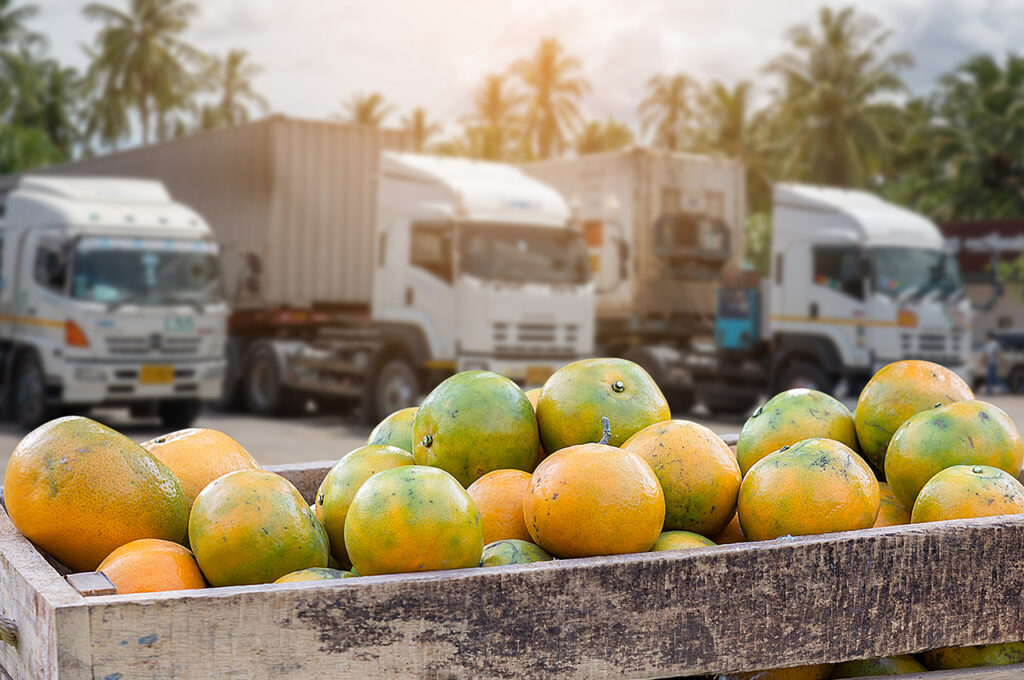
Whilst ambient goods won’t expire at “room temperature”, you may still need temperature-controlled transport to ensure the quality of the product and maintain its shelf life. Using specialist refrigeration equipment installed in ambient haulage trailers, you can shift up to twenty-eight tonnes of goods quickly and efficiently.
These vehicles come internally equipped with temperature monitoring devices and data loggers, which send real-time data to the logistics operators who can then liaise with the driver. Nowadays, this technology is especially advanced, exploiting AI capabilities and machine learning to improve efficiency and foster more sustainable transport practices.
Ambient packaging
On top of the vehicle itself, the nuances of packaging may have an impact on the quality of service. To ensure that the products remain compliant with numerous transport accreditations, they may be packaged in a way that protects them from physical damage, extends their shelf life, and maintains their quality during transport and storage. This can involve using materials such as cardboard, plastic or even aluminium to shield the products from moisture, light and other environmental factors.
What about products that need to be kept cooler?
Products requiring chilled and frozen haulage are a different kettle of fish. Chilled and frozen distribution involves more immediately perishable goods – goods that degrade at room temperature. These goods must be kept at temperatures below 8°C to prevent the rapid growth of harmful bacteria, which can render them unsafe for consumption.
In contrast to ambient goods, which are safe under temperature conditions between 15°C and 25°C, chilled and frozen products necessitate more stringent controls, often relying on specialised equipment like freezers or dry ice. Understanding these differences is crucial for businesses deciding whether to manage their logistics in-house or consider outsourcing their distribution needs for efficiency and safety.
On review
Ambient transport refers to the transportation of products that need to be maintained at temperatures between 15°C and 25°C.
Ambient haulage is an important method of preserving the integrity and quality of products such as tinned and processed foods as well as medicines.
And with sufficient temperature control, distributors can guarantee the seamless transportation of high-volume products across the country with goods arriving in pristine condition.