
As online retail has blossomed over the last few years, there has been an unprecedented increase in the transport and storage sector to match it. This may not be surprising – many businesses have sought to expand their operations to meet such demands. However, not all business owners are aware of the best methods to improve warehouse efficiency.
This is where the detailed evaluation of current systems and implementation of strategic improvements can prove invaluable. Managed properly, a business can streamline its operations, increase customer satisfaction and maintain stricter compliance.
Why it is important to improve warehouse efficiency
Whether a company deals in cosmetics, pharmaceuticals or perishable foodstuffs such as frozen foods, a robust logistics strategy and effective storage facilities are of the utmost importance. By refining the supply chain from distribution hub to end destination, employees can respond to hazards and unforeseen circumstances more flexibly, saving time, resources and stress later down the line.
Furthermore, enhanced warehouse efficiency can lead to greater productivity within and outside of the warehouse facilities, allowing for goods to reach their destination swiftly and more safely. Whether improvements are made within a large or small company, implementing these changes will reduce the overall cost of the processes.
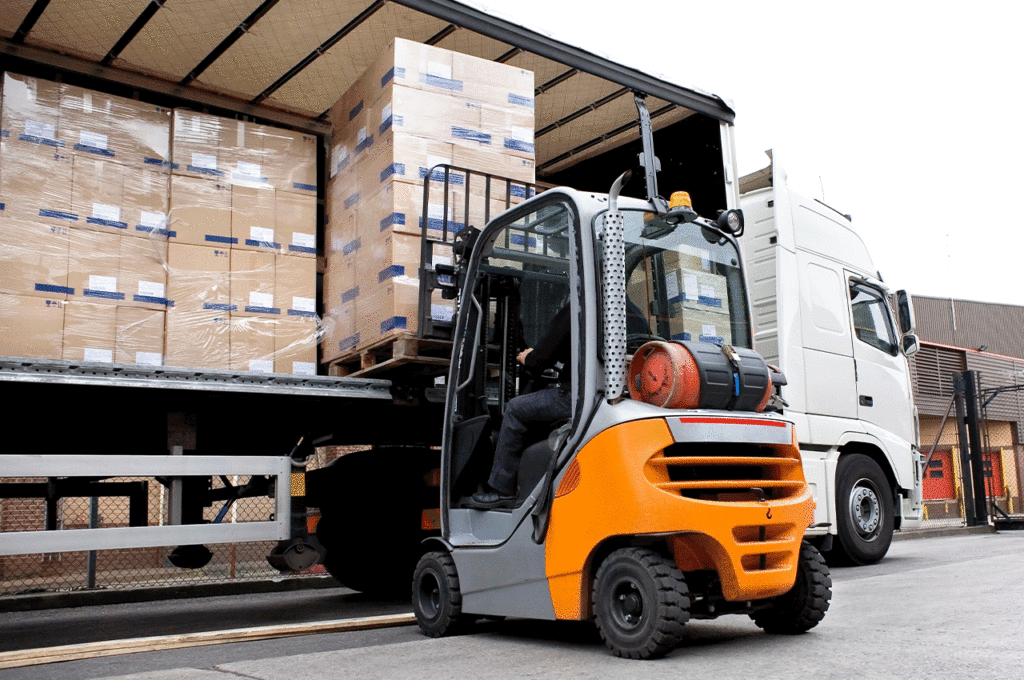
10 warehouse improvement ideas from our distribution and logistics experts
Whether applied to a business operating from an individual warehouse or those conducting a multi-channel operation, the following best practices will ensure that it remains compliant and efficient.
1. Outsource your distribution to the experts
With experienced transport partners at the helm of your distribution network, you can rest assured that your products will remain in perfect condition during transit as they are transported to and from your distribution hub promptly and efficiently.
Outsourcing your distribution means that products are handled by specialists who are aware of the best routes and have the best equipment including live tracking, food-grade tankers and temperature monitoring equipment.
They will be trained in the latest food safety legislation and supply chain logistics to ensure flawless compliance and quality control. Often this will include industry certification such as the BRCGS accreditation, but more specialised accreditation such as the Dairy Transport Assurance Scheme are also indicators of high standards as regular audits are required to ensure that these standards are maintained over time. With such improvements in place, warehouse efficiency will be augmented significantly because you will be able to achieve the following:
- Greater versatility
- Time savings
- Lower capital expenditure
- Sustainable growth (scalability)
2. Optimise warehouse layout
The benefits of ensuring the layout of your warehouse is as logical as possible should be self-evident. However, this can easily be overlooked with high levels of inventory to manage alongside client demands.
When taking steps to make your warehouse more efficient you should organise the design with the following considerations in mind to maximise productivity:
- Maintaining easy access to the products and equipment
- Allowing for flexibility in positioning products
- Minimising goods handling
- Maximising the available space
- Implementing clear and consistent signage (e.g. colours, pictograms, illuminated signs and acoustic signals)
3. Invest in the latest training resources
To minimise any risks related to product handling and storage and save valuable time, you should invest in the current training resources available to you. Food and product safety legislation constantly develop over time, making it paramount that staff are well-trained and have a deep understanding of relevant concepts such as HACCP and health and safety procedures. Quality training should not stop after onboarding, rather a robust training strategy should be put in place to encourage employee growth.

4. Regularly check and monitor equipment
Under current health and safety legislation, routine inspections of storage and tracking systems are a legal requirement. This is particularly pertinent if your business handles foodstuffs or other consumable products, and more pertinent still if they are temperature-sensitive goods requiring temperature-controlled logistics to ensure they remain safe for use. Regular checks of your equipment will ensure regulations are met and the continuing efficiency of your warehouse.
5. Prioritise safety in all areas
Whilst it may be tempting to encourage the speed of product shipment and management, safety should always take centre stage in warehousing and distribution operations. By cutting corners on safety, you might save money in the short term, but accidents are incredibly expensive – and your customers’ health will be put into jeopardy.
6. Standardise processes
Of these warehouse improvement ideas, the standardisation of your processes is particularly crucial to maintain compliance with health and safety regulations. To maintain food safety during transportation and storage all employees should follow a standardised framework based upon the principles of HACCP as is required by Regulation (EC) 852 of 2004.
7. Maintain robust record keeping
To encourage continuous improvement and measure performance, accurate records should be maintained by all businesses handling and transporting products. This will help operators to identify areas of improvement and where they could be more efficient.

8. Improve item coding and labelling
Under numerous examples of food and product safety legislation, it is recommended that products must be clearly labelled with accurate and easily understood information. Not only will this reduce shipping errors, but it will also reduce the amount of time required to manage and locate products. Invest in tracking identification technologies and you can reduce this further.
9. Reduce warehouse travel time
Emission and travel time reduction are the future of logistics. To improve your warehouse efficiency steps should be made to reduce the distance your products travel unnecessarily. For example, shipments can be made more efficient by implementing strategies such as combining multiple drop-off points into a single journey.
Pair this strategy with a centralised distribution centre and you will be able to transport more shipments of your products in fewer journeys, regardless of temperature and other quality control requirements.
10. Explore technological avenues
Data-led solutions are crucial to the modern-day distribution environment. Whether you decide to invest in a cloud-based warehouse management system (WMS) or temperature-controlled logistics, real-time tracking of your products will improve both quality control and traceability of your products as you can monitor the whereabouts and condition of your products digitally.
Warehouse and distribution efficiency with Dennis Distribution
As your business grows and develops, maintaining the optimal procedures becomes all the more vital to success. While it is easier to manage your stock as a small business, this is not the case when it comes to scaling its operations.
At Dennis Distribution, we can assist you with the logistics involved in this undertaking. As a BRCGS and DTAS accredited transport provider, we can help you improve your warehouse efficiency by transporting the goods to and from your distribution hub, all thanks to our specialised, temperature-controlled fleet. Get in touch to talk through your options today.