
If you deal in milk transport or distribute chilled food goods, you may have come across the Dairy Transport Assurance Scheme. The right distributors will have this accreditation, helping dairy products arrive cool, fresh and clean on delivery. With this certification, both suppliers and end consumers can rest assured that all of the current food transportation standards are met, if not exceeded, and that industry best practices are embedded in a distributor’s daily operations.
What is the Dairy Transport Assurance Scheme?
The Dairy Transport Assurance Scheme (DTAS) covers 95% of all milk haulage in the UK – approximately 14 billion litres per year. In short, DTAS is a health and safety strategy enforced and created by Dairy UK, a processor-oriented institution that advocates for farmer-owned cooperatives and private dairy firms. The group is dedicated to holding manufacturers to stringent standards and maintaining supply chain quality assurance, ensuring that dairy products remain safe and nutritious for the end user.
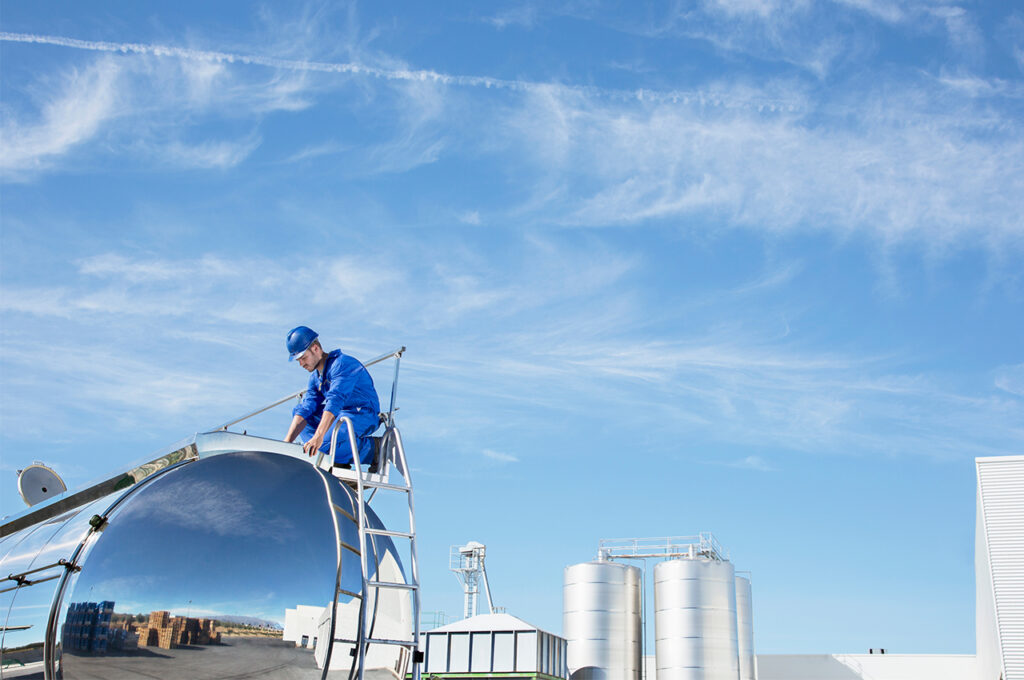
The requirements for milk transportation under the DTAS accreditation
Working alongside organisations such as the Food Standards Agency and National Milk Laboratories, Dairy UK’s work is underpinned by the latest scientific data in the field and years of industry experience. With these insights, they have devised a set of 63 standards against which dairy distributors are assessed.
As part of the Red Tractor Assurance Supply Chain initiative since 2015, the DTAS covers rigorous specifications including:
- Fleet and equipment
- Milk quality, hygiene and security
- Out-based reload sites
- Personnel and training
- General milk transport management.
As they stand, these regulatory requirements are relatively wide-reaching, so we will break these 5 categories down to provide more detail.
Fleet and equipment monitoring
To ensure high levels of food safety during transportation measures must be taken to secure the physical condition, maintenance and cleanliness of all vehicles and equipment that come into contact with the dairy products distributed. This monitoring involves the systematic examination of each component from refrigerated trucks and milk tankers to the temperature-controlled logistics systems and the product handling strategies in place.
Food safety and hygiene
Central to this comprehensive health and safety program is the proper adherence to public health regulations and strategies such as HACCP, which must be fully documented across milk transport, collection and delivery.
Site maintenance and evaluation
To ensure the consistent application of the DTAS standards, members are required to ensure regular site maintenance and evaluation in preparation for external audits.
In addition to general management, they must pick one of the following site categories for annual audits, and they must be relevant to their operations:
- Sub-depots, out-based reloads (OBR) and lay-by use
- Roadside and farm collection
- Reload
- Milk fractions
- Depot on-site CIP
Continuous improvement and training
Alongside physical and environmental requirements, DTAS members must proceed with regular training and development to ensure that standards are continually improved. All members approved under the scheme are expected to attend the DTAS annual conference to receive the latest guidance.
General milk haulage management
Finally, the general management strategy under the Dairy Transport Assurance Scheme entails everything from route planning and scheduling to data monitoring and record keeping.
The logistical aspects of dairy haulage aim to optimise milk collection and transportation efficiency while minimizing delays and environmental impact. The documentation of key data, including temperature logs, inspection reports, and delivery schedules maintains quality assurance. These records serve as critical tools for accountability and traceability, allowing for quick identification and resolution of any issues that may arise during transportation.
General management also encompasses communication and coordination between dairy farms, haulage companies, and processing facilities, ensuring a seamless flow of information and cooperation amongst stakeholders.

How are members of the Dairy Transport Assurance Scheme assessed?
Administered by Dairy UK, the DTAS certification is awarded to members after successfully complying with current legislation and best practices over the course of several audits. Standards are reviewed on an annual basis, with unplanned audits being executed by DTAS assessors throughout the year.
During these audits, if enough non-compliance issues are found and they exceed the stated threshold, DTAS accreditation will not be awarded. When significant non-compliance issues are identified, the depot has a maximum of 28 days to rectify them and provide evidence of corrective actions taken to meet the standard requirements. Once this is done, the assessor will send the summary report to Dairy UK, confirming the depot’s compliance, and the certificate will be issued accordingly.
Depot and out-based site audits
For a depot to receive certification as compliant under the scheme’s guidelines, it must undergo an annual assessment. If there are sub-depots associated with the primary site, the assessor will visit at least one sub-depot and, if applicable, one out-based site used by the depot. Subsequent visits will rotate through other sub-depots and out-based reload sites.
The responsibility for assigning an assessor and setting the assessment visit date falls on milk purchasers. They are in charge of scheduling assessments for their haulage depots and for hauliers contracted to them. Depots not contracted to any specific purchaser or contracted to multiple purchasers will have their assessments conducted by an independent assessor authorized under the scheme.
DTAS milk transport and food safety
When you choose a bulk liquid food transport distributor, you should always look for the DTAS accreditation. Accredited service providers offer higher levels of protection against dairy spoilage, waste and malpractice, and, therefore, your brand reputation.
Challenges transporting perishable dairy products
Milk transport is one of the most challenging of all food distribution journeys, specifically due to the extremely sensitive nature of milk. It is a perishable good because it provides the perfect environment for bacterial pathogens to grow, which presents three problems:
- Financial losses due to spoiled goods
- Potential legal action if spoiled goods reach the end consumer
- Damaged customer relations and brand reputation as the news reaches the wider public.
For added peace of mind, the DTAS assures tanker cleaning standards, including cleanliness, insulation, sampling, metering and temperature measurement. This means that the risks involved with transporting perishable goods will be significantly decreased, allowing business owners to spend their energy more efficiently, managing the in-house team(s).
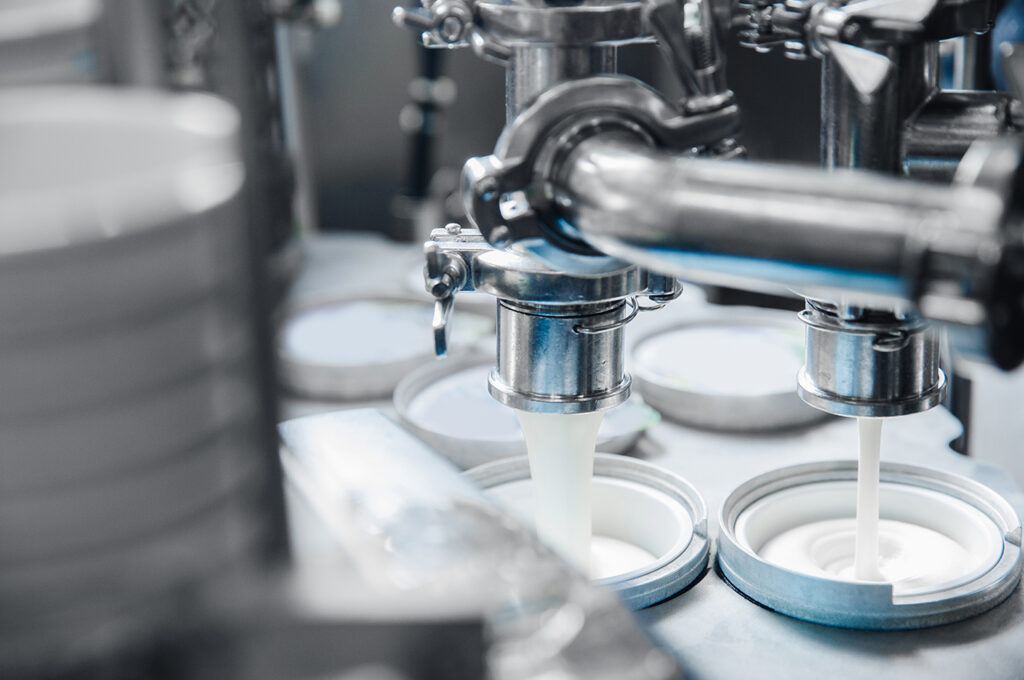
What the DTAS accreditation means for producers
Not only is the DTAS a mark of quality; it can also save time and money by making sure your entire milk haulage process meets the highest standards. This starts long before your milk hits the road.
For starters, the scheme runs annual inspections on all milk haulage depots to check the abovementioned five standards. It also runs in tandem with the Red Tractor Scheme – a well-known set of certified standards that make sure that British food products are responsibly sourced and safely produced – in addition to the BRC Global Standard or BRCGS, another food safety framework crucial to exemplary distribution
So, any food carrying the Red Tractor logo has to be distributed by a DTAS-accredited and BRGCS-approved distributor.
Considerations for goats’ milk
In recent years, goats’ milk has become a more popular choice as consumers seek more alternatives. Likewise, it is being used as an ingredient for baby formula, due to its relatively low allergens compared to cow’s milk.
Consumption of goats’ milk in the UK is relatively low compared to other countries. Throughout the world, goats’ milk is more popular than cows’ with some 4.8 million tonnes consumed each year. As it becomes a mainstream alternative here in the UK, it’s important to be familiar with transportation legislation.
Safety and hygiene for goats’ milk is covered in the Dairy Products (Hygiene) Regulations 1995. Specifically, there should be fewer than 100 coliforms per ml. These are bacteria which are common in water and do not cause disease by themselves, but can indicate pathogens of other diseases if they are present. Goats’ milk should be stored below 7.5°C to prevent the growth of these bacteria.
This is where technology can help.
How chilled food distribution can help with milk haulage
A specialist chilled food distribution network can help to keep both cows’ and goats’ milk to these chilled temperatures, while complying with food hygiene regulations.
This works with:
- Efficient insulation: after collecting chilled milk, the tankers’ insulative material ensures it remains the same temperature.
- Haulage logs: each collection is logged by mobile technology which records the producer, driver, amount, temperatures (average and max), delivery destination, and final volume and average temperature at delivery.
The best milk haulage distributors will partner with their clients to ensure accurate reporting from the moment the goods leave. They will also have trained their drivers to go on the most efficient routes, particularly for remote locations with challenging driving conditions.
Changing standards
As mentioned previously, DTAS also carries out regular audits and unplanned inspections to make sure distributors are keeping milk products safe. In line with this, it regularly updates legislation. For example, in 2018, a new law was introduced to increase safety for those working with milk tankers at a height. More recently, Dairy UK has changed the way that the DTAS assesses its members, switching to a modular format for audits.
While there are overall standards for transporting dairy, for example, food hygiene regulations, the DTAS also has strict policies for milk. This applies to both raw whole milk and milk fractions. Workers must run daily temperature checks, keep records of milk production dates, and prevent cross-contamination. For example, organic milk must not be contaminated with Kosher or Channel Island milk.
Pick a DTAS-accredited milk haulage expert today
At Dennis Distribution, we’re proud to be DTAS-accredited, which means we’re always up to date with the ever-changing standards in milk haulage. We also run the most efficient routes to prevent spoilage and deliver the premium product. Ask us about our milk haulage services today.